
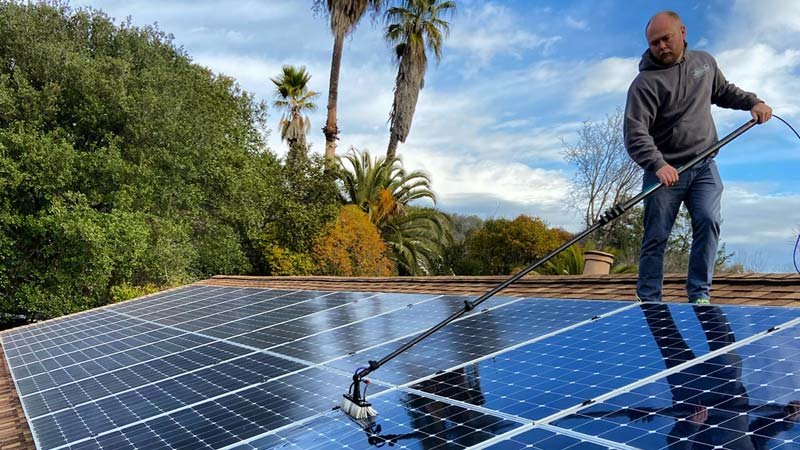
Solar panel cleaning isn't equally valuable at all times of year. In the Bay Area, cleaning at the right seasonal moments captures dramatically more production value than cleaning at random intervals. Understanding local weather patterns, soiling events, and utility rate structures lets you build a cleaning schedule that maximizes the financial return of every service.
The Bay Area Solar Calendar
Spring (March–May) — First Priority Window
The spring cleaning window — specifically late April through mid-May — is the single highest-value cleaning moment of the year for most Bay Area solar owners:
- Heavy spring pollen season (March–April) has peaked and is declining
- Summer sun angle is approaching — maximum daily production potential is imminent
- Winter rain has deposited mineral spots and flushed soiling into irregular patterns
- Bird activity peaks in spring — droppings accumulate rapidly
🌸 Spring cleaning logic: You're cleaning away the winter/spring accumulation just before entering the highest-production period of the year. The value of every percent of recovered output is at its maximum during May–September.
Summer (June–September) — High Production, High Soiling
Summer is peak production season and peak soiling season simultaneously. Dust, marine layer deposits, bird activity, and occasional smoke events all peak in summer. If you clean twice a year, your second cleaning should fall in mid-July to August — catching the second half of peak production with clean panels.
For properties near the coast or with significant bird activity, a midsummer cleaning is especially valuable — saltair deposition and bird droppings accumulate rapidly in warm weather.
Fall (September–October) — Fire Season Response
Fall cleaning timing in the Bay Area is increasingly driven by wildfire events rather than the calendar. The September–November fire season regularly deposits ash and fine particulates on panels across the entire region.
- Clean after any significant smoke event — don't wait for scheduled service
- October and November have increasingly valuable production hours as winter utility rates shift
- Time-of-use rate structures in Pacific Gas & Electric and other Bay Area utilities make fall afternoon production particularly valuable
Winter (November–February) — Low Priority But Not Zero
Winter rains help somewhat — removing loose surface dust. But winter is low-priority for cleaning because:
- Sun angle is lowest — production potential is at its minimum
- Shorter days mean fewer production hours
- Cost-benefit of cleaning is lower than other seasons
Exception: if you experience a significant soiling event (wildfire, construction dust, heavy bird activity) in winter, cleaning still makes sense.
Recommended Cleaning Schedules by Property Type
| Property Type | Recommended Schedule | Optimal Timing |
|---|---|---|
| Standard residential, inland | 2x per year | Late April/May + August/September |
| Coastal residential | 3x per year | April/May + July + October |
| Near trees or high bird area | 3–4x per year | April/May + July + September + November |
| Commercial systems | Quarterly minimum | January + April + July + October |
| After wildfire event | Immediate | Within 2 weeks of event |
The Condition-Based Approach
The most financially optimized approach isn't purely calendar-based — it's condition-based. If you have access to production monitoring data (SolarEdge, Enphase, SunPower monitoring apps all provide this), track your monthly production against the previous year's same month. When you see output declining by more than 10% without a weather explanation, that's your cleaning trigger — regardless of the calendar.
Combining a baseline calendar schedule (2x per year minimum) with monitoring-triggered cleanings after significant events gives you the best of both approaches: consistent maintenance plus responsive action when soiling events occur.
What About "Self-Cleaning" Panels?
Some premium panels market anti-reflective or hydrophobic coatings as "self-cleaning." In low-rainfall, high-soiling environments like the Bay Area, these coatings reduce but do not eliminate soiling accumulation. Bird droppings, wildfire ash, and salt air deposits adhere to all panel types. Professional cleaning is required on schedule regardless of panel brand or coating technology.
📊 Production monitoring tip: Check your monitoring app every month. Compare your current month's production to the same month last year. A drop of more than 10% without a weather explanation almost always means soiling — and it's time to clean.